Tag Archives: medicine

The day my eye exploded

OK, that’s a slight exaggeration, but it is kind of how I have felt these past two days. As many of you  know, I haven’t had the most typical of experiences with Crohn’s disease. If there’s some bizarre way that Crohn’s inflammation can affect you outside of the digestive tract, it seems like it’ll find me. I’ve had the swollen joints and ankles, I’ve had skin rashes, I’ve even had these strange, bruise-like bumps that showed up on my legs for a while. And I’ve also had iritis.

As the name would imply, iritis is inflammation in the iris.It would usually start with some eye irritation, where it would merely feel like I had an eyelash stuck in there, but it wouldn’t go away. Eventually, my eye would become pretty irritated and I might have some blurred vision.

I’ve had this issue pop up a couple of times since my diagnosis, but I usually could just get some eye drops and it would clear up in a couple of weeks and not return. But around the time I started Tysabri in 2011, I got a pretty bad case that wouldn’t go away. It started around Thanksgiving and I was still dealing with it after my surgery in May. But about a month after my surgery, it completely cleared up and hasn’t caused an issue since.

stephanie hughes eye ball iritis inflammation stolen colon ostomy crohns blog

That is, until Tuesday night. I started having some mild irritation, but nothing too bothersome. When I went to bed, I realized that it was very red and used some saline to see if they would help. When I woke up in the morning, I could immediately tell things weren’t right. My eye just hurt. It was giving me a headache and any light was making it worse. As soon as the office opened, I called my eye doctor and they were able to fit me in. He told me it was definitely a lot of inflammation, but thankfully it was only in the one eye (previously it had been in both). He said when he looked in there, it look as if it were snowing because of all of the inflammatory cells floating around. He prescribed me some steroid drops and dilated my eye yesterday to help stop the production of the inflammatory cells.

I went back to work afterwards, but the blurred vision from my eye and the sensitivity to light quickly gave me a headache. I left a few hours early because of it, but I had to drive across town to get my eye drops because my local pharmacy did not have them. Of course, I would have an issue where I can to get my eye dilated on the sunniest day in a month!

I had a difficult time getting around, because I was having to keep my right eye closed and even then, it was still hurting. I got home and I just went into the bedroom with all of the lights off. I eventually feel asleep for an hour or so, just to give my eye a rest.

Today, my eye is doing much better. That creepy picture of my eye is actually from this morning. Yesterday, it looked much worse. To the point that I tried to sweep my bangs in front of my eye any time I was near someone. And I also kept my sunglasses on when I went inside anywhere because I’d rather people think that I think I’m a diva than for them to see my gross eye ball.

The most difficult part of this is the realization that the inflammation is not completely gone from my body. I’m not sure if there was something recently that would have brought this on, or perhaps it’s coming from the part of my colon that is left inside of me. I’m not sure, but I’m working on getting some answers.

Can’t catch a break

Actually, that’s exactly my problem. I did catch a break. In my radius and ulna, that is.

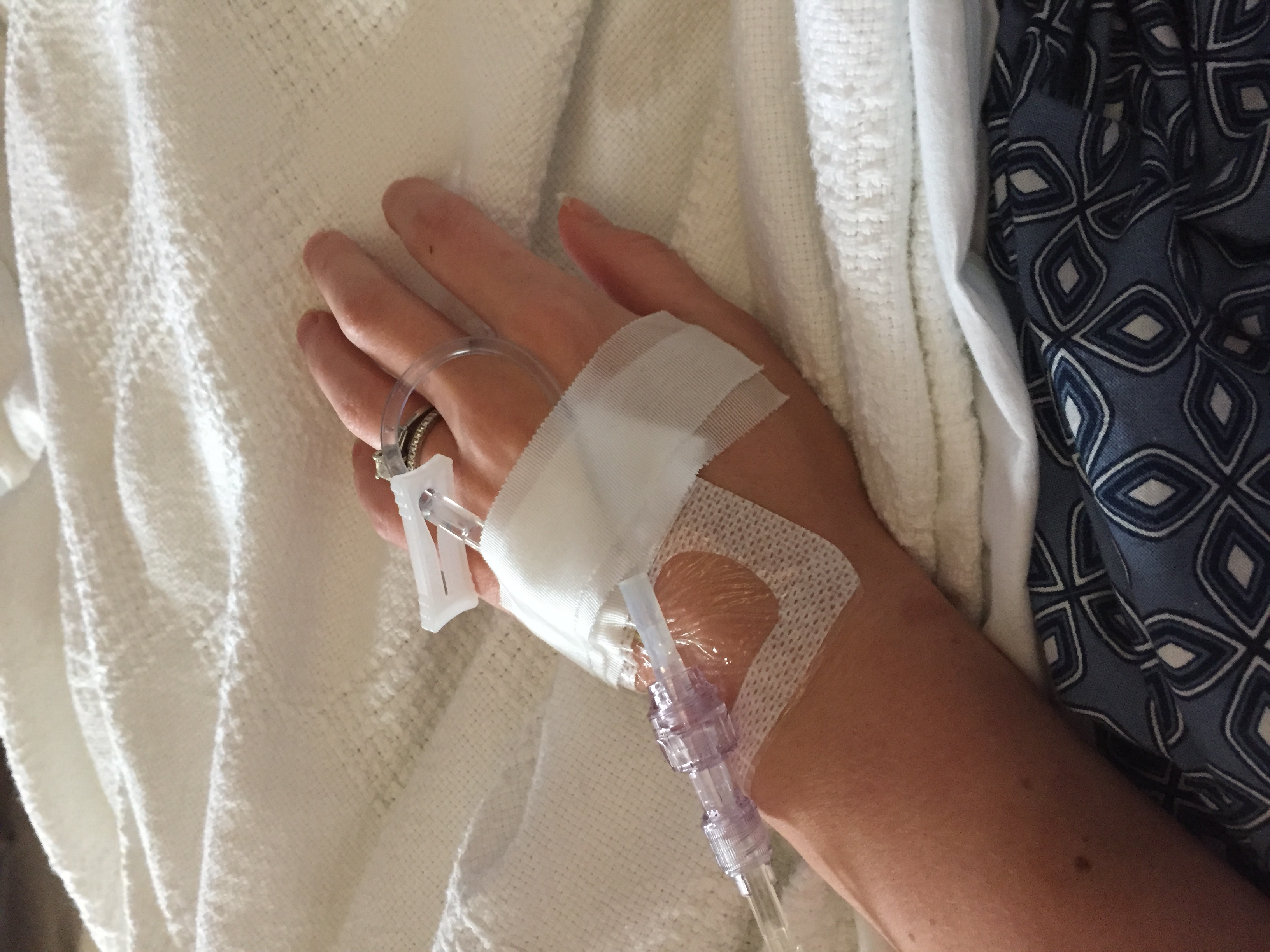
I had my first cycling incident this weekend. I was out with a couple of ladies in Apex, ridingstephanie hughes splint broken arm radius ulna bones stolen colon crohns ostomy blog through some of the back roads. We were having a lovely time, it wasn’t too cold and it was the first long bike ride I had done in a while.

We were on our way back and had ridden about 8.5 miles when we had to climb up a small hill. Nothing too big, but as I made my way up I needed to downshift. But when I shifted, my chain locked up. I thought it had actually come off at the time, but either way, I had to stop. Unfortunately, right at that moment I had a truck driving pass me, so I couldn’t step off to my left. I had to step off towards the shoulder, but there wasn’t any shoulder… only a ditch.

It was a slow fall. I didn’t fall hard, but it was a bit of a ways to go. Instinctively, I put my hand out to catch myself, but it was farther of a fall than I anticipated, so I think I braced myself for something shorter. As soon as I went to get up I realized something was wrong. My hand was already swelling and I didn’t even dare to try to rotate it.

The ladies came to help me up and even made me a splint out of a portable bike pump. I could still wriggle my fingers, so at least I knew I still had circulation. I called Jarrod to come pick me up to go to the emergency room. It was awful that we were so far away, but he got there pretty quickly and got me to the doctor.

After lots of X-rays and examinations, it was determined that I have a small fracture at the end of both my radius and ulna in my right arm. Thankfully, none of the small bones in my wrist were broken and it appears that everything is still where it is supposed to be. Therefore, a few weeks in a cast should get me right back on track. I am currently in a splint, but will be going to an orthopedic later this week and they will likely put me in a real cast.

It has been tough the past couple of days. It hurts a lot. They gave me pain meds, which help, but don’t get rid of the pain. Also, I am very right-handed, and trying to do things with my left hand (such as typing this blog post) are difficult. Not to mention just how bulky this splint is and that it gets hot and itchy.

I am upset that I won’t be able to ride or swim or run for a while. However, I am very thankful that things aren’t worse. My Vegas race is over; I don’t have any others on the immediate horizon. Of all times for this to happen, this is actually a pretty good time. But I doubt I will be able to finish up my Christmas decorating and wrapping of presents. I’m definitely going to be working on my patience in the coming weeks.

So does this mean I’m “officially” an athlete?

A lesson in IBD: part 2

I wasn’t planning on making this a two-parter, but as I was putting things together yesterday, I realized there was so much more information that I could put into one post. And while this is far from extensive, I feel that the two posts can give a pretty good idea as to what living with IBD looks like. I hope it has been educational  Happy Crohn’s and Colitis Awareness Week!

Types of Crohn’s disease

Ileocolitis: The most common form of Crohn’s, ileocolitis affects the end of the small UNC digestive tract organs diagram stolen colon ccfa crohns colitisintestine (the ileum) and the large intestine (the colon). Symptoms include diarrhea and cramping or pain in the right lower part or middle of the abdomen. This type is often accompanied by significant weight loss.

Ileitis: This type affects only the ileum. Symptoms are the same as ileocolitis. In severe cases, complications may include fistulas or inflammatory abscess in right lower quadrant of abdomen.

Gastroduodenal Crohn’s disease: This type affects the stomach and the beginning of the small intestine(the duodenum). Symptoms include loss of appetite, weight loss, nausea, and vomiting.

Jejunoileitis: This type is characterized by patchy areas of inflammation in the upper half of the small intestine (the jejunum). Symptoms include mild to intense abdominal pain and cramps following meals, as well as diarrhea. In severe cases or after prolonged periods, fistulas may form.

Crohn’s colitis: This type affects the colon only. Symptoms include diarrhea, rectal bleeding, and disease around the anus (abscess, fistulas, ulcers). Skin lesions and joint pains are more common in this form of Crohn’s than in others

Treatment

Medication: Medications are designed to suppress the immune system’s abnormal inflammatory response that is causing symptoms. Suppressing inflammation not only offers relief from common symptoms like fever, diarrhea, and pain, it also allows the intestinal tissues to heal. In addition to controlling and suppressing symptoms (inducing remission), medication can also be used to decrease the frequency of symptom flare ups (maintaining remission). With proper treatment over time, periods of remission can be extended and periods of symptom flare ups can be reduced.

There are a number of different types of medications used. If you’re interested in learning about these, CCFA’s website has a good break-down: Crohn’s disease Medication.

Surgery: Even with proper medication and diet, about 70% of people with Crohn’s disease eventually require surgery. There are several different types of procedures that can be performed. If there’s a section of the colon that is particularly bad, they can take that part out and rejoin the ends. They can also make the end of the colon into a stoma for a colostomy or take the entire colon out and make the end of the small intestine into a stoma for an ileostomy (what I have). Finally, there’s also the option for those with ulcerative colitis, to join the small intestine to the rectum and form a j-pouch, that functions, in essence, in the same manner as a normal digestive tract.

Unlike ulcerative colitis, surgery does not cure Crohn’s disease. Approximately 30% of patients who have surgery for Crohn’s disease experience recurrence of their symptoms within three years and up to 60% will have recurrence within ten years.

Prognosis

Crohn’s disease is a chronic condition for which there is no cure. It is characterised by periods of improvement followed by episodes when symptoms flare up. With treatment, most people achieve a healthy weight, and the mortality rate for the disease is relatively low. However, Crohn’s disease is associated with an increased risk of small bowel and colorectal carcinoma, including bowel cancer. It can vary from being benign to very severe and patients could experience just one episode or have continuous symptoms. It usually reoccurs, although some patients can remain disease free for years or decades. Most sufferers live a normal lifespan.

This post is merely a conglomeration of information from CCFAUNC School of Medicine, and Wikipedia. Since this is not an academic paper, some of the information I took straight from these sources without worrying about putting it into my own words. I am in no way trying to plagiarise and pass this off as my own work.

A lesson in IBD: part 1

CCFA crohn's colitis awareness week stolen colon

On November 14, 2011, the U.S. Senate passed Senate Resolution 199 (SR 199): “A resolution supporting the goals and ideals of Crohn’s and Colitis Awareness Week, December 1-7.” 

This week is all about spreading awareness for inflammatory bowel disease, and while that’s really what I hope to do every day of year, this week is an important one to recognize. So in honor of Crohn’s and Colitis Awareness Week, I thought I’d provide some information on these disease that some may not know.

Inflammatory bowel disease (IBD) usually refers to either Crohn’s disease or ulcerative colitis. As the name would indicate, these diseases are marked by inflammation in the digestive tract. Crohn’s and colitis are auto-immune diseases, meaning that the white blood cells that usually attack foreign invaders, like bacteria and viruses, mistakenly start attacking healthy body tissue.

Crohn’s disease was first recognized in 1932 when Dr. Burrill Crohn and his colleagues  published a paper titled “Terminal Ileitis: A new clinical entity.” Today, it is estimated that 1.4 million Americans are living with IBD.

The cause of IBD is not known, but heredity, genetics and environmental factors are thought to play a role. IBD tends to run in families, so those with an immediate family member with it are more likely to develop IBD. Studies show that 5-20% of diagnosed individuals have an immediate family member with IBD. (Personally, I have a 2nd-degree family member who had Crohn’s: my grandfather.) The risk is greater with Crohn’s than with ulcerative colitis. They are more common in developed countries rather than undeveloped countries, in urban rather than rural areas, and in northern rather than southern climates.

Symptoms of IBD include persistent diarrhea, rectal bleeding, urgent need to move bowels, abdominal cramps and pain, sensation of incomplete evacuation and constipation, which can lead to bowel obstruction.  (Many of these symptoms also present in irritable bowel syndrome or IBS, but those with IBS do not have inflammation.) Other symptoms that can stem from IBD are fever, chills and night sweats, loss of appetite and significant weight loss and fatigue. Crohn’s disease and ulcerative colitis can both cause symptoms outside of the digestive tract, including liver problems, arthritis, skin manifestations and eye problems.

IBD is generally diagnosed by a combination of symptoms, lab results (blood, stool, urine, biopsy samples) and colonoscopy/endoscopy.

Below is a comparison of a healthy colon and an inflamed colon. You can see how raw the lining looks.

healthy inflammed colon stolen colon crohns ibd blog

Crohn’s vs colitis

Crohn’s disease can affect any part of the digestive tract, from the mouth all the way to the anus. Crohn’s most commonly affects the end of the small bowel (the ileum) and the beginning of the colon. It can affect the entire thickness of the bowel wall and it can cause patches of inflammation, leaving healthy areas in between.

Ulcerative colitis is specific to the large intestine. It only involves the innermost lining of the colon and does not occur in patches, as Crohn’s disease can.

This post is merely a conglomeration of information from CCFAUNC School of Medicine, and Wikipedia. Since this is not an academic paper, some of the information I took straight from these sources without worrying about putting it into my own words. I am in no way trying to plagiarize and pass this off as my own work.

That was awesome!

I just wrapped up my first interview and my first Google+ hangout on air. …and it was amazing! It’s the first time I’ve actually spoken out-loud about living with Crohn’s and an ostomy so candidly. But this was definitely one of the best experiences, pretty much ever.

I have to give a big “Thank you” to Frank Garufi, Jr. who put the whole thing together and conducted the interview. He has been such an amazing contact and I’m very proud to be working with him now to raise awareness for Crohn’s and colitis.

I can’t upload videos onto this site (not yet, anyways), but here is the link where you can see the whole interview on YouTube.

Wow. I have no idea how I’m going to get to sleep tonight.

Google hangout Stephanie Hughes Frank Garufi Jr Crohns Colitis effect Stolen Colon ostomy blog